Did Oakland Get More From Uncle Sam?

In a word, yes.

The other day, Oakland Mayor Dellums sent out a note bragging about how many dollars Oakland received from Federal stimulus grants – and he thanked everyone who worked on the aid requests.

While we believe that Oakland did well in the handouts, it’s really hard to tell:  (1) exactly how much; (2) what was specifically funded; and (3) how all the grants compare to other cities.  The note ended up obfuscating the good news, at least for non-policy wonks.

The Mayor says “the City has brought in, to date, over $65 million in stimulus funds, including over $35 million from competitive grants.”  That’s great, so where’s the $35 million in the competitive grant comparisons to other cities?

There’s no question that we have received more money than all other cities shown, magnified in the per-person and index data.  However it’s not clear what programs are included in or excluded from these city comparisons.

Last February, we had the full list of what was getting requested.  How did the City of Oakland do?  What was requested versus rejected?  What’s still getting approved by Uncle Sam?

We’re not trying to rain on the parade, and are grateful for external funds in our budget time-of-need.  It might be nice to know as much as we did last winter, when the request process began for Oakland and all cities nationally.

Helping The Hungry, This Holiday

This time of year, it can get absurdly confusing to pick your good causes.  Should you give away food, clothes or money?  Do you give in a reactive manner, by running into folks around town?  Or do you shop around, trying to decide what charities might catch your fancy?

Last year, our posting about charity drop-offs was one of the top traffic-getters at Today in Montclair.  That gives us plenty of hope, since you were clearly interested in helping needy Oaklanders.

This week, Oakland bloggers came together in the “blogoaksphere” to help Alameda County’s Community Food Bank.  You may now donate food morsels with a mouse click or two, which seems much easier than buying goods and dropping them off.

Our local Food Bank benefits when they buy food directly – and claim to “stretch $1 in donations into $7 worth of distributed food.”  Plus there’s no need for the Food Bank to sort through food donations, so they conserve on sweat equity too.

Try clicking the cute red buttons above, or in the right-hand navigation.  Then start shopping for virtual groceries and donate money directly.  We decided to “buy” some peanut butter for the Food Bank, and it only took a few minutes…for this good cause.

Montclarions Miffed About Real Estate Tax Uses

In November, Today in Montclair wanted to understand and gauge local attitudes towards taxes levied on homeowners.  After letting our real estate tax survey bake in the oven, we’re ready to share the goods with everyone.

The takeaways?  While you’re somewhat resigned to Oakland’s current taxes, you don’t want them increased much without better accountability.  You’re focused on how any tax increases would get spent by the city.  And you’re wrestling with Proposition 13’s legacy, too.
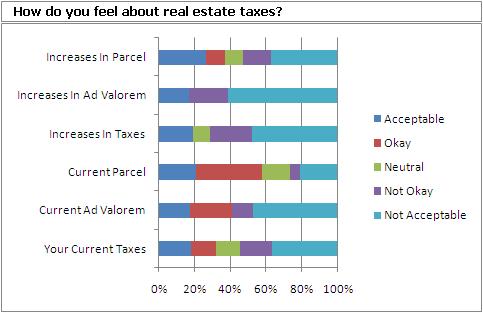
Tax Rate Attitudes

Based on our survey, some 32 percent of Montclarions felt current overall taxes were acceptable/okay and another 14 percent were neutral.  The ad-valorem taxes were viewed similarly, with 42 percent acceptable/okay and no one who was neutral.  Respondents were more positive towards parcel taxes, with 58 percent ticking acceptable/okay and 16 percent who were neutral.

Reactions to tax increases moved slightly south, as expected.  Some 29 percent felt overall increases would be acceptable/okay/neutral, while 71 percent said thumbs-down.  The biggest negatives were due to ad-valorem increases, with a full 83 percent ticking not acceptable or okay.  By contrast, 53 percent said parcel taxes were not acceptable or okay.

We also asked locals how they generally voted for measures which increased homeowner taxes.  These responses tracked consistently with parcel tax viewpoints.  Some 45 percent reported “no, most times” and five percent said “no, always.”  The remaining survey takers said they would accept increases most times/sometimes.

As expected, last summer’s decision to increase city ad-valorem taxes was rather quietly revealed.  These taxes were increased from 1.33 to 1.41 percent – and 36 percent knew, 59 didn’t know, and the rest weren’t sure.

Tax Revenue Uses

We asked a hypothetical question about how tax increases might be used, and Montclarions overwhelmingly wanted more resources directed to hills services:  65 percent ticked acceptable/okay.  This isn’t surprising, as you do hear neighbors complain about safety, infrastructure or park support.

Yet the desire to direct resources wasn’t fully focused on hills services.  Survey takers also believed that resources should be funneled to specific city departments or services, with over 50 percent deeming that acceptable/okay.

The majority of Montclarions didn’t want increases to be unassigned, as 60 percent were against increasing taxes for general city coffers.  However there’s ongoing debate about resource allocations and accountability:

– I do not trust the Oakland city council to make sound financial decisions but I also dislike special assessments for basic city services.  Piece-mealing obscures the reality and the enormity of the city’s spending.

– In general, taxes for a specific purpose do not work in Oakland – this just frees up general fund monies for non-worthwhile endeavors.

– My taxes keep going up and the city’s administration and services keep deteriorating. There is something wrong with this picture.

– OAK has to get its problems under control – the fiscal house is a fiscal sieve – you cannot have examples weekly of how badly the CC [City Council] misspends the precious resource – money and then have the CC going back time after time to require more payments.

– I don’t mind paying extra taxes but I feel the city is grossly mismanaged and any revenue raised goes into a black hole / politicians’ pet projects without any derived benefit to me, the tax payer.

Unfair Taxes Anyway

Many Montclarions were quick to point out Proposition 13’s tax inequities, and the data bears this out.  Based on all respondents reporting, their annual taxes were $9,940 (average) and $9,710 (median) – and ranged from $4,000 to $18,000.

Of course, the more-recent home buyers were taxed far higher than their neighbors.  One hard-hit respondent still took this in stride, declaring “I bought my house 5 years ago and pay more taxes than anyone on my street.  Something that raises my taxes $65 doesn’t bother me, and helps even out the tax load.”

Another survey taker believed we have to create a better tax solution:  “Generally speaking, we pay far too little property taxes compared to other parts of the world.  We need a way to contribute more to our living infrastructure without being too subjected to the wild fluctuation of the home values.”

Based on Today in Montclair’s real estate survey, we can safely say that locals are willing to pay up – far more than we expected.  However what’s done with the tax revenues is a much bigger question, and the City of Oakland will have to work on some real confidence and credibility building there.

More info:  The survey respondents split 64% male and 36% female.  Ages broke down as: under 40 years (23%);  40-49 (41%); and 50-plus (36%).  Everyone owned homes:  under 1 year (5%); 1-2 (9%);  3-4 (18%); 5-9 (18%); 10-14 (27%); 15-19 (9%); and 20-plus (14%).

Keeping The Montclair Booksellers Alive

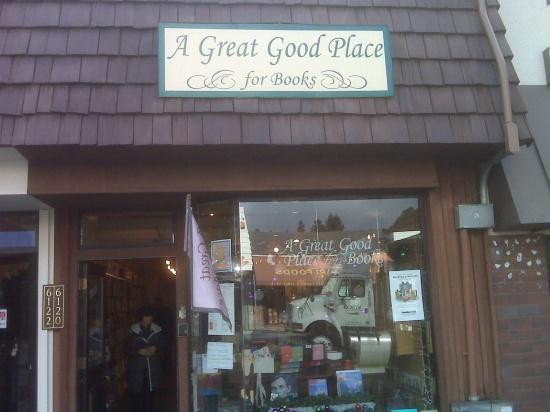
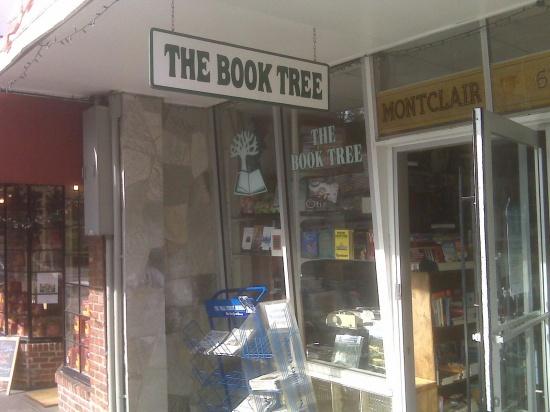
We’re hopeful about the fates of Montclair Village booksellers, A Great Good Place for Books and The Book Tree.  They are settled in our village, ready to support the reading fixes of a degree-laden populous.  Montclarions are lucky to browse and buy so many interesting titles, right here.

Yet retail booksellers are hurting generally, and our local indies must be feeling a little pain too.

Hardcovers At Risk

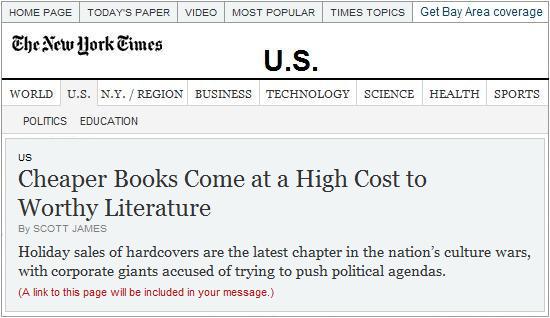
Yesterday, the New York Times published an article about the price and cultural wars related to hardcover books.  The story starts by featuring our place, A Great Good Place in Montclair Village, where proprietor Kathleen Caldwell says that fully a third of her sales come from hardcovers.

The newspaper of record makes important points about hardcovers and how their distribution is pretty limited.  Apparently a small handful of conservatively-minded, mass titles are discounted heavily and available through places like Walmart these days.  So the Times wonders if independent sellers, like Caldwell, will be able to soldier on.

Oakland Booksellers Hurting

We don’t know whether Oakland indies are hurting a little or a lot, but a major chain is definitely suffering here.  Barnes and Noble, the largest U.S. chain, may close their Jack London Square location by year-end.  The rumored reason is no surprise:  business lost to online discounters like Amazon.

Outside Montclair Village, there seem to be Oakland indies bucking the trend.  Both Diesel and Walden Pond come to mind quickly, since they have interesting titles and deep inventory.  They have many fans and are doing pretty well, right?

We proudly say “no problem” for Montclair’s shops too, as long as we patronize our book gulch on La Salle Avenue.  While these indie booksellers have noticeable challenges from big retailers and online sources, they depend on our reliable business.  And it’s hard to resist stopping by these places and walking out with some find.

Montclair Offers Options

We have two options on La Salle, starting with A Great Good Place. This literary shop is great for more voracious readers, since they host many fascinating authors on their book tours as well as stock up for all the local book clubs.  When asked, Kathleen or her staff suggests titles for you, your family or friends.  Also they offer discounts cards and knock 15% off when you buy online.

Our mass market shop, The Book Tree, is located within the old-timer Montclair Pharmacy.  This bookseller is great for best sellers, and frequently displays discounted “must haves” on their sidewalk table.  They also stock chart-toppers from earlier times, travel guides of every stripe, and all those unmentionable trade/genre paperbacks that are guilty pleasures.

So Montclair Village’s bookstores might be an anachronism.  With two sellers actively competing for our business, there should be critical mass for destination book buyers.  Foot traffic around town is also a key factor, and needs to be continuously boosted by all Montclair merchants.

You probably buy books in many places, but this is a clarion call to help keep our booksellers alive too.  Remember to drop a few dollars in book gulch during the holidays – long live the indies!

Uncool To Buy Things

The economy has changed how some people think about shopping.  At least based on local coffee shop chatter, it seems uncool to admit you are buying anything at all.  We have more than our share of residents who sound and act cautious because we’re in the recession.

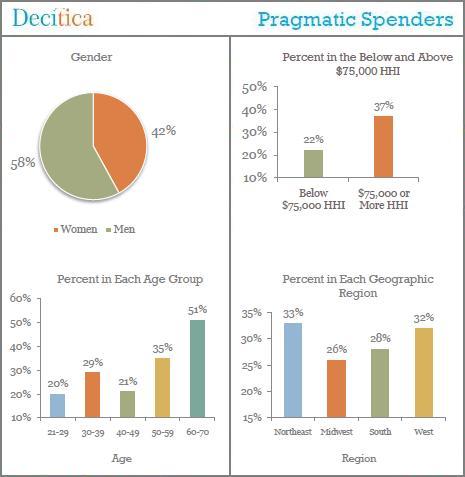
Well, marketing mavens have labels for everyone, and so-called Pragmatic Spenders “cut back and are engaging in thrift like others but seem less troubled by the recession.”  We’re guessing there are plenty of them in the Montclair area.

According to Decitica, Americans fall into four post-recession segments:  Steadfast Frugalists (20%); Involuntary Penny-Pinchers (29%); Pragmatic Spenders (29%); and Apathetic Materialists (22%).

Yesterday, I overheard discussion between two Pragmatic Spenders, who were right next to me at a Mountain Avenue coffee shop. Here’s a quick paraphrasing of their exchange:

Woman X:  Carries in nice clothing catalog and sits down.
Woman Y:  Leans over from next table, “What is it?”
Woman X:  “I found this catalog outside.”
Woman Y:  “I just throw them out, so I don’t buy things.  Anything good?”
Woman X:  “Yes,” and flips through.
Woman Y:  “If you keep stuff long enough, it comes back into style.”
Together:   They discuss pants, and ways to mask old styles.
Woman X:  “I don’t need things, but it’s nice to look.”

While Montclarions likely fit in all four spending attitudes, it feels like the frugal mindset is everywhere. With the holidays arriving now, we wonder how much frugality is burnished versus pushed aside for seasonal largesse.